What Is BPA and Why Is It Unsafe for Babies?
BPA (Bisphenol A) is an industrial chemical used in certain plastics and resins. It can leach into food and liquids, especially when baby bottles or feeding products are heated, scratched, or reused frequently. For newborns, BPA exposure may interfere with hormone regulation and early development. This is why pediatric experts strongly recommend choosing BPA-free baby products to support healthy growth and baby feeding safety from day one.
What Does BPA-Free Really Mean?
A BPA-free label means that the product does not contain Bisphenol A. However, not all BPA-free claims are equal. Some products replace BPA with similar chemicals like BPS or BPF, which may pose similar health concerns. Truly safe baby products use materials such as medical-grade silicone, borosilicate glass, or certified food-grade plastics. Parents should always look beyond the label and verify material transparency to ensure they are choosing genuinely non toxic baby items.
Which Baby Products Must Always Be BPA-Free?
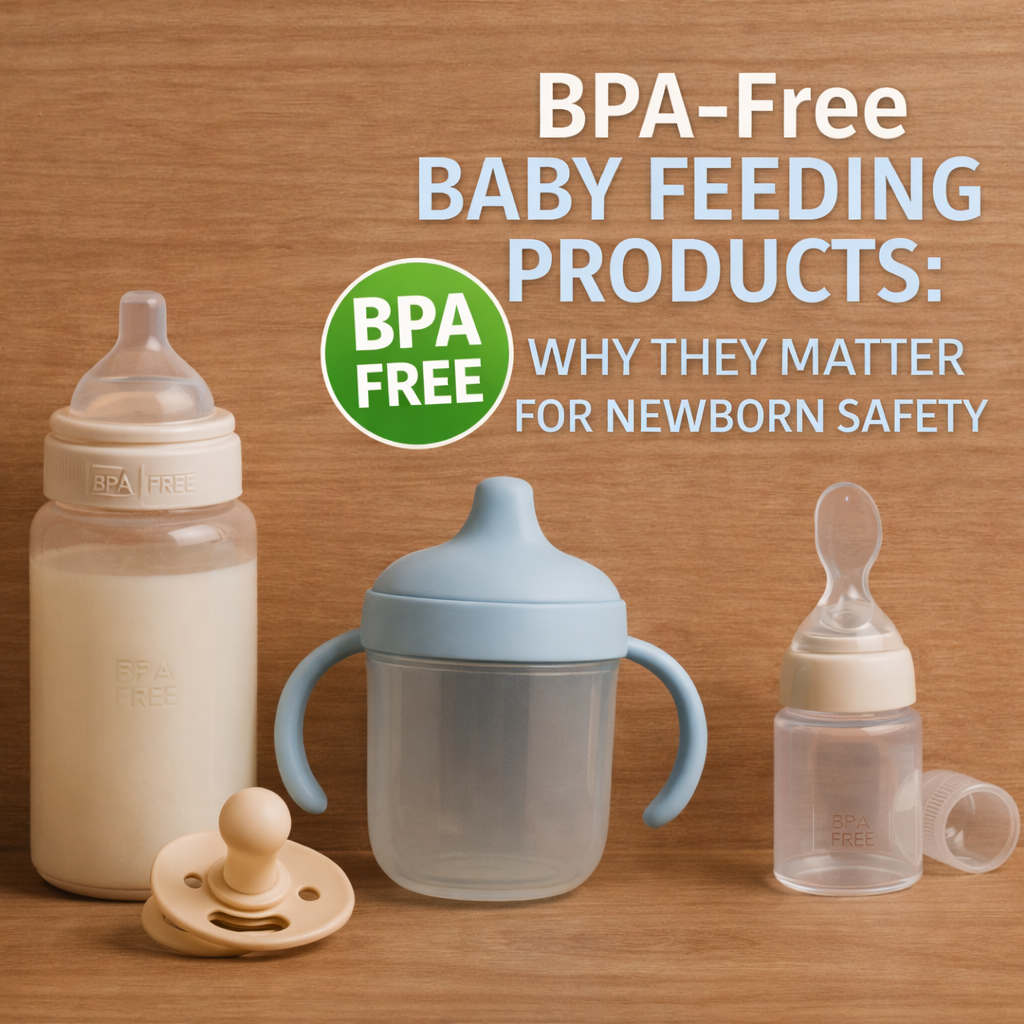
Certain baby essentials should never compromise on safety. Feeding bottles, nipples, pacifiers, teethers, and sippy cups all come into direct and repeated contact with a baby’s mouth. Choosing BPA free bottles helps reduce the risk of chemical exposure during feeding. Teethers and pacifiers must also be toxin-free since babies chew on them for long periods. Ensuring these essentials fall under certified BPA-free baby products is critical for everyday baby feeding safety.
How to Identify Safe Labels and Certifications
Parents can identify safe baby products by checking trusted certifications and compliance standards. Look for FDA-approved food-contact materials, ISO-certified manufacturing, and international safety standards such as LFGB or EN certifications. Brands committed to non toxic baby items will clearly disclose testing protocols, materials used, and safety approvals. Avoid products with vague claims or missing certification details—transparency is a strong indicator of quality and trust.
Why Non-Toxic Materials Matter Beyond BPA
While avoiding BPA is essential, overall safety goes beyond a single chemical. High-quality non toxic baby items are also free from phthalates, PVC, lead, and heavy metals. Materials like silicone, glass, and high-grade polypropylene are safer alternatives that do not break down easily over time. Investing in safe baby products reduces long-term exposure risks and ensures a healthier feeding and play environment for your child.
Final Buying Tips for Parents
When choosing baby essentials, prioritize safety, durability, and verified compliance over price or design alone. Always check labels, certifications, and material disclosures before purchasing. Replace worn-out or damaged feeding items regularly, as deterioration can increase chemical exposure—even in BPA free bottles. By selecting certified BPA-free baby products from trusted brands, parents can ensure better baby feeding safety and peace of mind every day.
Leave a Reply