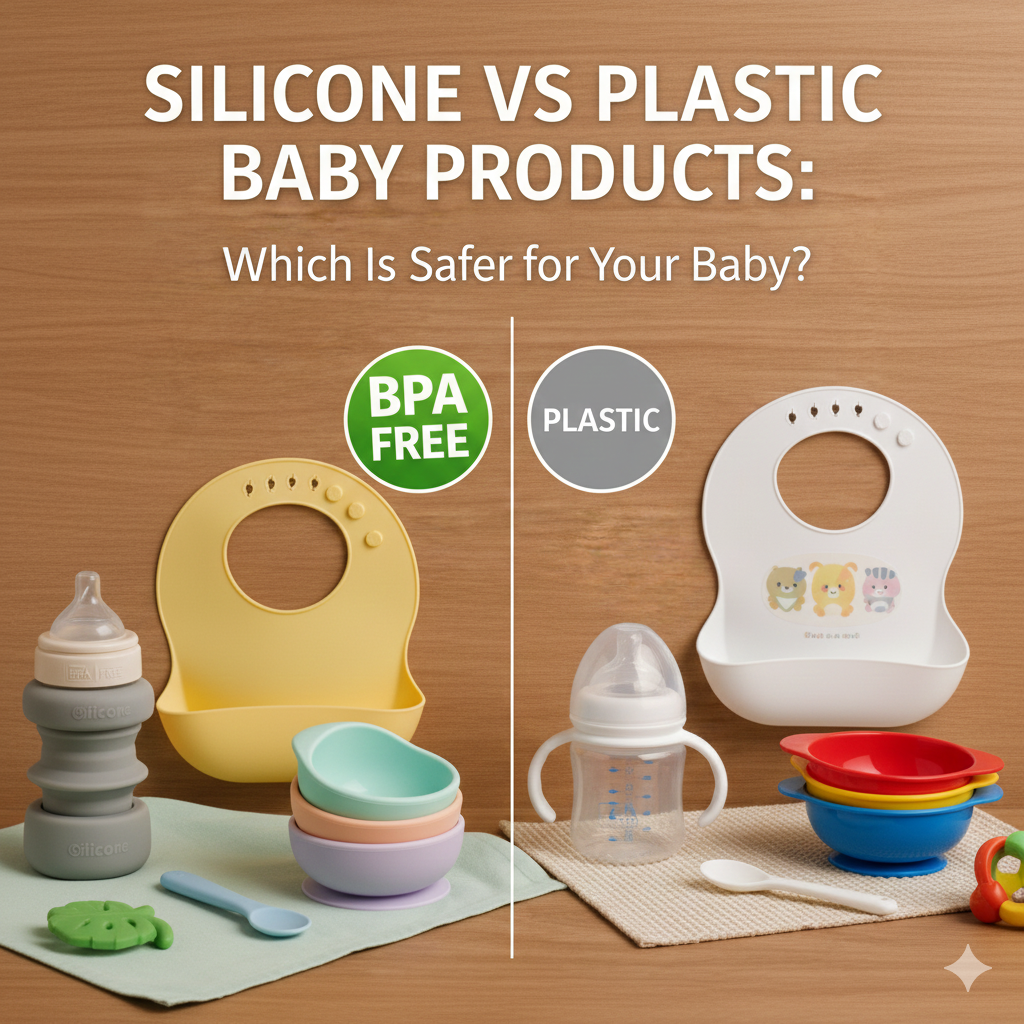
Choosing the right material for baby essentials is more than just a preference—it’s about health, safety, and long-term use. Parents today encounter a wide variety of silicone baby products and plastic baby products on the market. With safety standards evolving and awareness of chemical exposure increasing, it’s important to understand how materials compare, especially when it comes to baby safe materials for everyday feeding and care.
Brands like Royal Baby have been producing trusted baby feeding solutions since 2014, focusing on both silicone and carefully vetted plastic products designed to meet international safety requirements. royalbabyproduct.com
Overview of Baby Product Materials
Baby products are typically made from several core materials: plastic, silicone, glass, and stainless steel. Among these, plastic and silicone remain the most widely used for feeding bottles, nipples, pacifiers, sippy cups, and teethers.
Plastic products have historically dominated due to their lightweight and affordable nature, and many high-quality plastics today are designed with chemical safety in mind. Silicone, particularly food grade silicone, has become increasingly popular due to its soft texture, flexibility, and superior heat resistance. Understanding what each material offers helps parents choose baby safe materials with confidence for their little ones.
Pros & Cons of Plastic Baby Products
Plastic continues to be a common choice for many everyday baby essentials. Its advantages include:
- Lightweight and durable: Easy to carry and less prone to breakage compared to glass.
- Affordable: Generally more cost-effective for larger sets like feeding kits.
- Versatile: Available in many shapes and ergonomic designs, including handles and grips for easy holding.
However, there are trade-offs:
- Chemical risks over time: Although many baby plastics are now BPA-free (like products manufactured under Royal Baby’s quality standards), repeated heating and surface wear can increase the risk of microplastic release over long-term use.
- Degradation: Plastic can scratch or warp over time, especially with frequent sterilisation.
Products such as Royal Baby Baby Feeding Bottle 8OZ show how modern design balances practicality with safer materials, but regular inspection and replacement remain important.
Benefits of Food-Grade Silicone
Silicone, especially food grade silicone, is widely regarded as an excellent material for many baby products due to its inherent properties:
- Chemical stability: Unlike some plastics, true food grade silicone does not contain BPA or harsh plasticisers and does not leach under heat.
- Heat resistance: Safe for boiling, steaming, and dishwasher use without degrading.
- Gentle and flexible: Ideal for nipples, teethers, sippy spouts, and soft-touch feeding tools.
Silicone products are naturally resistant to cracking and withstand repeated cleaning cycles, offering superior longevity. Items like Little Royal Baby Bottle Feeder With Spoon – Silicone and Little Royal Silicone Baby Finger‑brush With Case demonstrate how this material enhances everyday baby use while maintaining baby product safety.
Safety & Durability Comparison
When comparing plastic vs silicone baby products, the question often comes down to long-term safety and wear:
Aspect | Plastic | Silicone |
Heat Resistance | Moderate | High |
Chemical Stability | Variable | Excellent |
Surface Durability | Can scratch/warp | Flexible & long-lasting |
Cleaning Ease | Moderate | Easy & hygienic |
Ideal For | Bottles, lightweight accessories | Nipples, teethers, soft spouts |
Both materials can be safe for babies when made thoughtfully and tested according to global standards. Manufacturers like Royal Baby ensure that even plastic components are friendly to infants by using rigorous quality and baby safe materials protocols across their product range. royalbabyproduct.com
Best Choice for Modern Parents
Choosing between silicone and plastic doesn’t have a one-size-fits-all answer—it depends on how the item will be used:
- For newborn feeding: Silicone nipples with wide-neck bottles or ergonomic feeding sets are excellent for both comfort and safety.
- For travel and light daily use: BPA-free plastic bottles and cups remain practical, provided they are regularly inspected.
- For teething or chewing: Soft, food grade silicone is typically a safer choice due to its durability and chemical stability.
Royal Baby’s global product range includes a variety of feeding bottles, silicone nipples, pacifiers, and accessories that are crafted with hygiene, comfort, and long-lasting quality in mind, catering to international markets and diverse parenting needs.
SEO FAQs for Rich Results
Q1: Is silicone safer than plastic for baby products?
Yes—food grade silicone is generally more chemically stable and heat resistant than many plastics, making it a strong choice for feeding nipples, teethers, and soft components especially used close to a baby’s mouth.
Q2: What certifications should I look for in baby products?
Look for products tested to international safety standards (FDA, LFGB, EN) and clearly labelled as BPA-free, phthalate-free, and made from baby safe materials.
Q3: How often should I replace plastic baby bottles?
Plastic bottles should be replaced at the first signs of scratches, cloudiness, or warping to reduce the risk of microplastic or chemical leaching over time.
Q4: Are silicone feeding accessories dishwasher safe?
Most food grade silicone accessories are safe for dishwasher and high-temperature sterilisation, though it’s always best to follow manufacturer guidelines.
Q5: Can plastic and silicone products be used together?
Yes—many feeding systems combine materials (e.g., silicone spout with plastic cup), balancing flexibility and structure while maintaining product safety.
Leave a Reply