Keeping baby feeding items clean is one of the most important steps parents can take to protect their child’s health. Newborns and infants have developing immune systems, making them more vulnerable to bacteria and germs that can grow on feeding equipment. Properly learning how to sterilize baby bottles, clean baby nipples, and maintain overall baby bottle hygiene helps reduce the risk of infections and supports everyday baby feeding safety.
While modern products are designed with safety in mind, correct cleaning and sterilising practices remain essential—especially during the first year. Brands like Royal Baby design feeding products that are compatible with common sterilisation methods, making it easier for parents worldwide to maintain hygiene with confidence.
Overview of Baby Feeding Hygiene
Baby feeding hygiene goes beyond basic washing. Bottles, nipples, sippy cups, spoons, and accessories frequently come into contact with milk, formula, saliva, and food residue—creating an environment where bacteria can multiply quickly if not cleaned thoroughly.
Sterilising baby products is especially important:
- For newborns under 12 months
- After illness
- When using products for the first time
- When water quality is uncertain
Maintaining proper baby bottle hygiene ensures feeding equipment is safe for repeated daily use and reduces exposure to harmful microorganisms.
Step 1: Cleaning Before Sterilisation
Before you sterilise baby bottles or accessories, thorough cleaning is essential. Sterilisation is not effective if milk residue or food particles remain on the surface.
How to clean baby bottles and nipples properly:
- Disassemble all parts (bottle, nipple, ring, cap).
- Rinse immediately after use with clean water.
- Wash using warm water and a mild baby-safe detergent.
- Use a dedicated bottle brush for bottles and a smaller brush for nipples.
- Rinse thoroughly to remove soap residue.
Cleaning first ensures that sterilising baby products is effective and hygienic.
Step 2: Safe Sterilisation Methods
There are several safe and widely accepted ways to sterilise baby bottles and feeding accessories. Parents can choose based on convenience, product compatibility, and household setup.
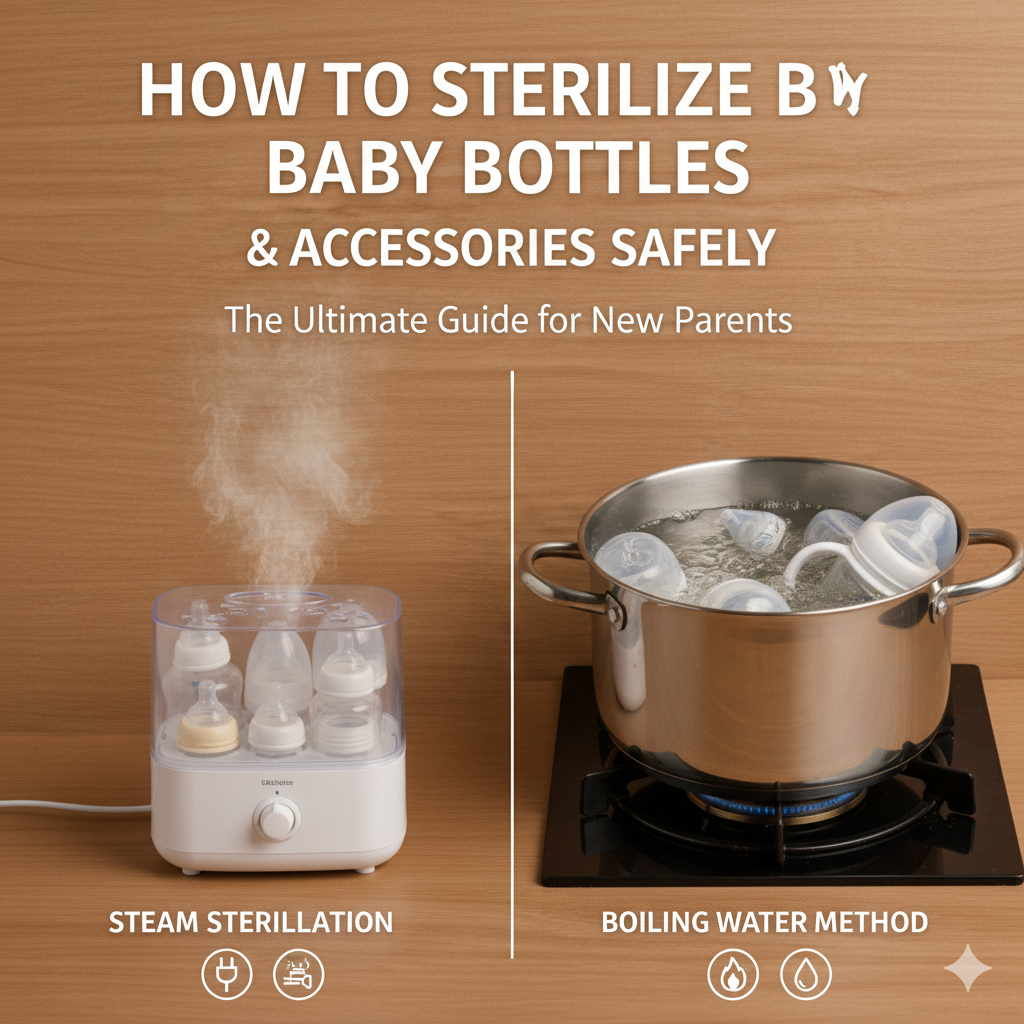
1. Boiling Water Method
- One of the most common and accessible methods globally.
- Submerge bottles and nipples fully in boiling water for 5–10 minutes
- Allow to air dry on a clean surface
This method works well for most feeding items, including those made from plastic and silicone.
2. Steam Sterilisation (Electric or Microwave)
- Steam sterilisation is quick and effective.
- Uses high-temperature steam to kill germs
- Suitable for busy parents and frequent use
Many Royal Baby feeding accessories are designed to withstand steam sterilisation safely.
3. Cold Water Sterilisation (Sterilising Tablets or Solutions)
- Ideal for travel or areas with limited electricity
- Requires correct dilution and soaking time
Each method supports baby feeding safety when used according to instructions.
Safety & Material Considerations
Not all materials respond the same way to heat and repeated cleaning. Understanding product materials helps parents choose the safest sterilisation approach.
- Plastic feeding products: Safe when BPA-free and certified, but should be replaced if scratched or cloudy
- Silicone feeding accessories: Highly heat-resistant, flexible, and ideal for frequent sterilising baby products
- Mixed-material products: Follow manufacturer instructions carefully
Royal Baby products are manufactured with materials selected to remain stable under standard sterilisation methods, helping parents maintain consistent baby feeding safety without guesswork.
Best Practices for Modern Parents
Sterilisation doesn’t need to be complicated—but consistency matters. Parents should adapt hygiene routines as babies grow and feeding habits change.
Helpful tips:
- Sterilise daily during early infancy
- Air-dry items instead of towel-drying to prevent contamination
- Store sterilised items in a clean, closed container
- Replace worn or damaged feeding parts promptly
By following proper routines to sterilise baby bottles and accessories, parents can reduce unnecessary risks and focus on what matters most—nurturing their child.
Royal Baby’s approach to product design prioritises ease of cleaning and compatibility with common sterilisation methods, supporting parents across different regions and lifestyles.
SEO FAQs for Rich Results
Q1: How often should I sterilise baby bottles?
For newborns, sterilise baby bottles at least once daily. As babies grow older and their immunity improves, sterilising less frequently may be acceptable if bottles are thoroughly cleaned.
Q2: Is boiling safe for all baby feeding products?
Most BPA-free plastic and silicone products are safe for boiling, but always check manufacturer instructions to ensure baby product safety.
Q3: How do I clean baby nipples properly?
Use warm water, mild detergent, and a nipple brush. Sterilise regularly, especially for babies under 6 months.
Q4: Can I sterilise baby products in the dishwasher?
Some baby bottles and accessories are dishwasher-safe, but dishwasher cleaning alone does not always replace sterilisation for newborns.
Q5: When can I stop sterilising baby bottles?
Many parents stop daily sterilisation after 12 months, but continued good baby bottle hygiene is still essential.
Leave a Reply