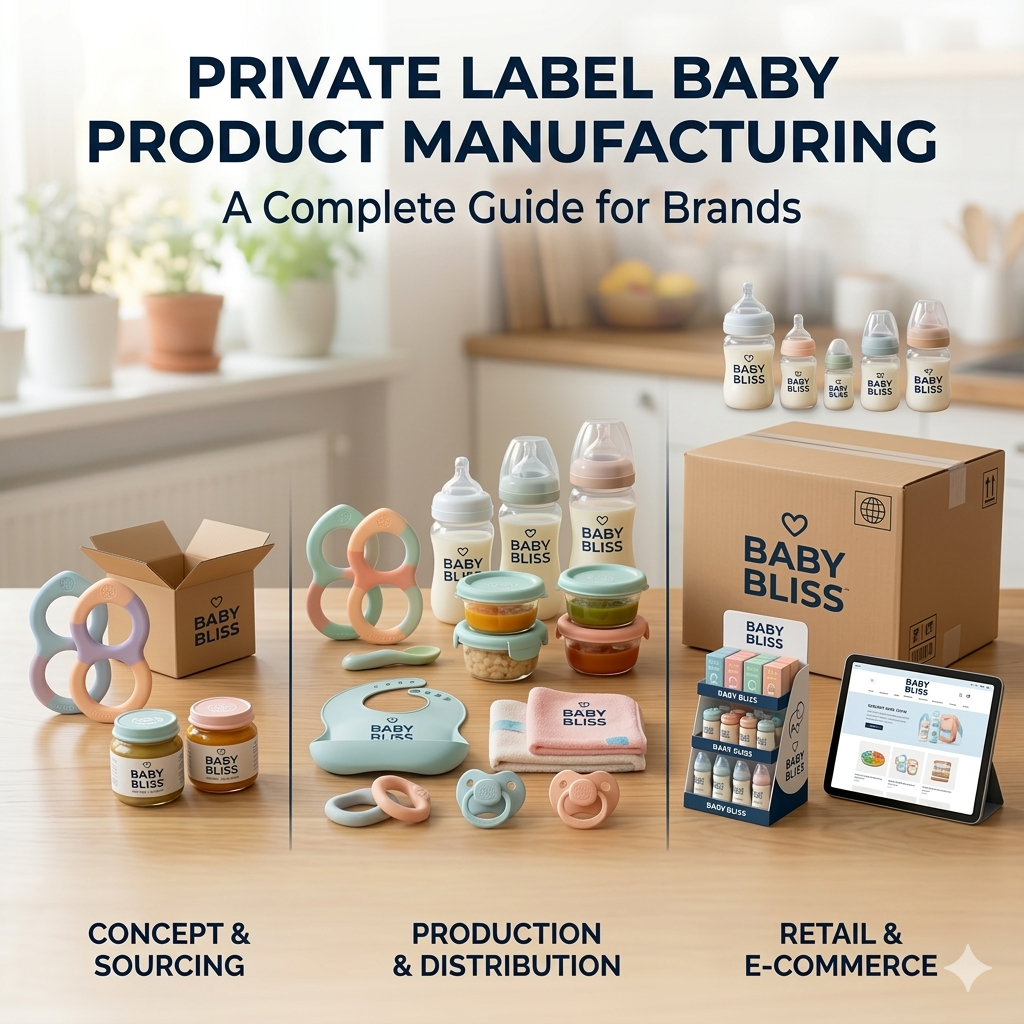
The global baby care market is growing rapidly, driven by rising parental awareness, premiumization trends, and increasing demand for safe, high-quality products. For entrepreneurs and established brands alike, entering this market through a private label baby product strategy is one of the fastest and most cost-effective ways to scale.
If you’re looking to launch or expand your baby brand, this complete guide will explain what private label manufacturing means, why brands prefer it, which product categories perform best, and how a trusted baby product manufacturer like Royal Baby Products can help you build a profitable and compliant brand.
Introduction to Private Label Manufacturing in the Baby Products Industry
Private label manufacturing refers to a business model where products are manufactured by a third-party company but sold under your brand name. In the baby care industry, this allows brands to create safe, high-quality products without investing in factories, machinery, or in-house production teams.
A private label baby product manufacturer handles product development, sourcing, production, and sometimes even packaging—while you focus on branding, marketing, and distribution.
This model is particularly popular in categories like feeding bottles, baby care accessories, grooming kits, and safety products.
Private label differs slightly from OEM baby products (Original Equipment Manufacturer), where brands may request deeper customization of design, materials, or formulation. In many cases, private label and OEM services overlap, depending on the level of customization required.
Why Brands Prefer Private Label Baby Products
Launching baby products independently requires heavy capital investment and regulatory approvals. Private label simplifies the process dramatically.
1. Speed to Market
Working with an experienced baby product manufacturer significantly reduces product development time. Instead of starting from scratch, brands can select pre-tested designs and customize them with packaging and branding.
This allows faster entry into online marketplaces, retail chains, and export markets.
2. Lower Investment & Cost Efficiency
Setting up a manufacturing unit for baby products requires:
- Specialized machinery
- Food-grade or medical-grade materials
- Skilled labor
- Safety testing infrastructure
Partnering with a private label baby manufacturer eliminates these overhead costs, making it easier for startups and D2C brands to scale.
3. Greater Brand Control
Private label gives you control over:
- Packaging design
- Brand messaging
- Pricing strategy
- Distribution channels
You focus on brand building while the manufacturer ensures production consistency.
4. Scalability
As demand grows, your manufacturing partner can increase production without you having to invest in infrastructure. This flexibility makes private labeling ideal for growing baby brands.
Baby Product Categories Ideal for Private Labeling
Not all baby products are equally suited for private label manufacturing. The most successful categories include:
1. Feeding Products
Feeding is one of the largest segments in baby care. Ideal private label options include:
- Feeding bottles
- Anti-colic bottles
- Sippy cups
- Silicone nipples
- Bottle sterilizers
These products benefit from customization options such as size, flow rate, anti-colic features, and branding.
2. Baby Care & Grooming Products
This category includes:
- Baby nail clippers
- Grooming kits
- Hair brushes and combs
- Thermometers
Many brands leverage custom baby products in grooming kits to create bundled offerings.
3. Baby Accessories
High-demand accessory products include:
- Pacifiers
- Teethers
- Bibs
- Storage containers
These are often manufactured as OEM baby products, allowing brands to differentiate through design and materials.
Compliance & Safety Standards for Private Label Baby Products
Safety is non-negotiable in the baby industry. Any private label baby product must meet strict regulatory standards.
Common Certifications Required
Depending on the market, certifications may include:
- BPA-Free certification
- FDA compliance (for certain regions)
- CE marking
- ISO manufacturing standards
- Food-grade material testing
Additionally, feeding products must undergo migration testing and quality inspections to ensure they are safe for infants.
When selecting a private label baby manufacturer, always verify:
- Factory certifications
- Material sourcing transparency
- Product testing protocols
- Batch traceability systems
Non-compliance can severely damage brand reputation and lead to recalls.
How Royal Baby Products Supports Private Label Brands
One of the biggest challenges in the baby product industry is inconsistent manufacturing quality. Many suppliers cut corners to reduce costs, compromising product durability and safety.
This is where Royal Baby Products stands out.
Royal Baby Products specializes in manufacturing high-quality baby feeding and care products for private label brands worldwide.
1. Comprehensive Private Label & OEM Support
Royal Baby offers:
- Private label baby product manufacturing
- Custom baby products development
- OEM baby products with tailored specifications
- Packaging customization
- Branding support
Whether you need standard product lines or fully customized designs, their team supports brands at every stage.
2. Strong Quality Assurance
Royal Baby prioritizes:
- Strict quality control processes
- Safe and certified materials
- Compliance with international safety standards
- Consistent production quality
Their structured manufacturing process ensures that each product batch meets safety and durability benchmarks.
3. Competitive Pricing Without Compromising Quality
Royal Baby solves a major manufacturing problem in the industry: balancing quality with affordability.
By optimizing production systems and supply chains, they deliver top-quality baby products at incredible prices—allowing brands to maintain strong profit margins while offering safe products to consumers.
This makes them an ideal baby product manufacturer for startups, exporters, and established retailers.
Leave a Reply