Feeding time should be a bonding experience — but for many parents, it quickly becomes stressful due to baby feeding problems like gas, colic, spit-up, or feeding refusal. The truth is, many of these challenges are connected to using the wrong bottle size or nipple flow rate.
This detailed guide explains common feeding issues in newborns, how bottle size and flow affect comfort, and how choosing the right products can help prevent discomfort. We’ll also explore effective colic baby solutions, ways to reduce gas in babies, and practical baby feeding tips to make feeding smoother.
Understanding Baby Feeding Challenges
In the first year of life, babies are still developing coordination between sucking, swallowing, and breathing. Even small changes in nipple flow or bottle size can impact feeding.
Common baby feeding problems include:
- Colic and excessive crying
- Gas and bloating
- Spit-up and reflux
- Nipple confusion
- Feeding refusal
- Overfeeding or underfeeding
Many parents don’t realize that incorrect nipple flow or oversized bottles can contribute directly to these issues.
Colic & Gas Problems: Causes and Solutions
Colic is often defined as prolonged crying without an obvious cause. One of the most overlooked triggers is air intake during feeding.
What Causes Gas in Babies?
- Fast-flow nipples causing gulping
- Poor latch on bottle nipple
- Feeding in improper position
- Overfeeding
- Inadequate burping
When babies swallow excess air, it gets trapped in their digestive system, leading to bloating and discomfort.
Colic Baby Solutions
- Use Slow-Flow Nipples for Newborns (0–3 months)
A slow-flow nipple prevents milk from rushing into the baby’s mouth and reduces air swallowing. - Choose Anti-Colic Feeding Bottles
Bottles with built-in vent systems help reduce vacuum formation and air bubbles. - Right Bottle Size by Age
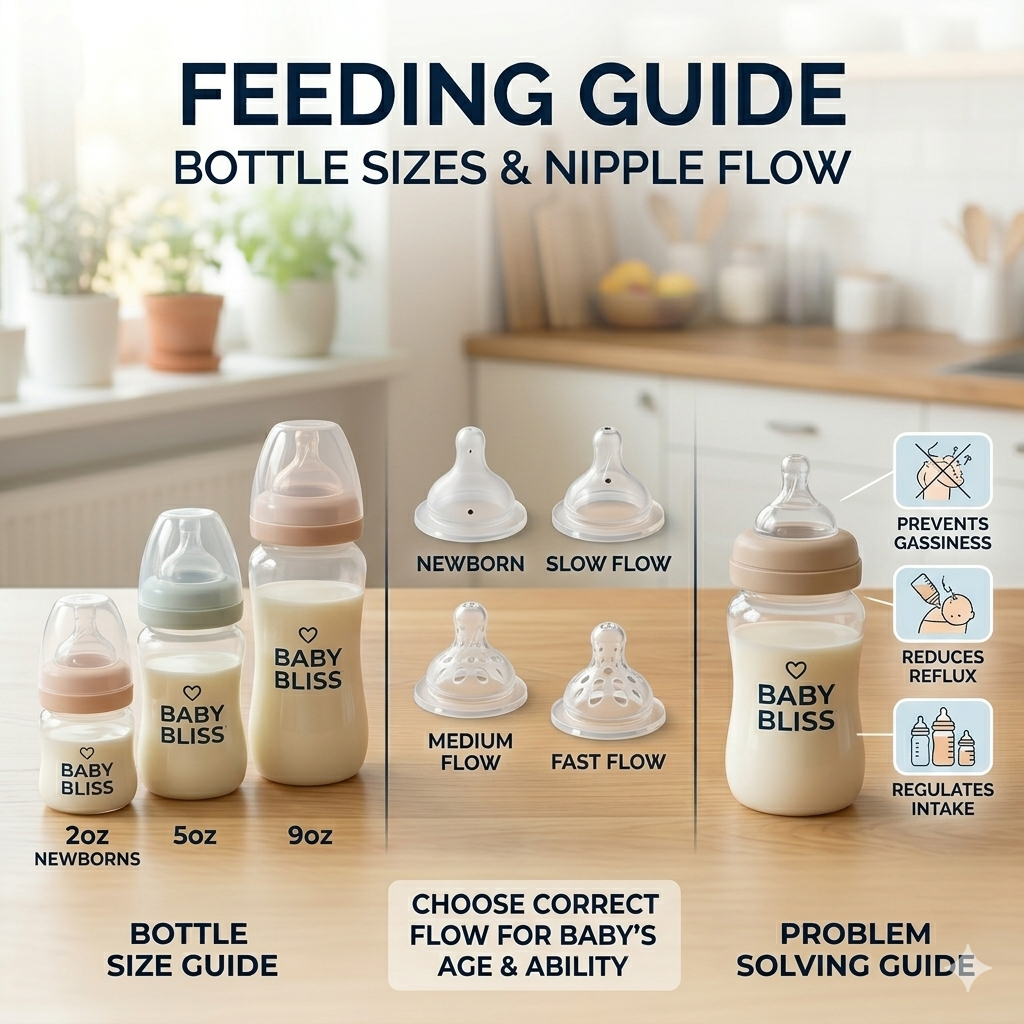
- 0–3 months: 60–120 ml
- 3–6 months: 120–240 ml
- 6+ months: 240 ml+
Using appropriately sized bottles avoids overfeeding, which can worsen colic symptoms.
- Proper Feeding Position
Keep baby semi-upright and ensure the nipple is always filled with milk to reduce air intake.
These small adjustments can significantly reduce gas in babies and minimize colic discomfort.
Nipple Confusion Issues
Many parents combine breastfeeding and bottle feeding. However, switching between breast and bottle can sometimes cause nipple confusion.
What Is Nipple Confusion?
Nipple confusion occurs when a baby struggles to adjust between the different sucking techniques required for breastfeeding and bottle feeding.
Bottle nipples often allow milk to flow faster than breastfeeding, making babies prefer the easier option.
How to Prevent Nipple Confusion
- Use slow-flow nipples that mimic natural breastfeeding.
- Avoid switching flows too quickly.
- Maintain consistent feeding techniques.
- Choose orthodontic or breast-shaped nipples.
Selecting bottles designed to simulate breastfeeding can reduce feeding issues in newborns and make mixed feeding easier.
Spit-Up & Feeding Refusal
Spit-up is common in infants due to immature digestive systems, but excessive spit-up may indicate feeding technique or bottle issues.
Why Do Babies Spit Up?
- Fast-flow nipples
- Overfeeding
- Feeding while lying flat
- Air intake
- Reflux sensitivity
Similarly, feeding refusal can happen if the baby feels overwhelmed by milk flow.
Baby Feeding Tips to Reduce Spit-Up
- Use age-appropriate nipple flow levels.
- Avoid forcing baby to finish bottles.
- Burp baby every 2–3 ounces.
- Keep baby upright for 20–30 minutes after feeding.
Adjusting bottle size and nipple speed can dramatically reduce baby feeding problems linked to reflux and discomfort.
Product-Based Feeding Solutions
Modern feeding technology has evolved significantly. Today’s anti-colic bottles and flow-controlled nipples are designed to reduce air intake and improve feeding comfort.
Key Features to Look For
- Anti-colic vent system
- BPA-free material
- Clear nipple flow labeling
- Breast-like nipple design
- Easy-to-clean structure
Choosing high-quality feeding bottles is critical for safety and comfort.
How Royal Baby Is Solving the Manufacturing Problem
One major concern in the baby products industry is inconsistency in manufacturing standards. Many products look similar but vary in material safety and durability.
That’s where Royal Baby stands out.
Royal Baby focuses on:
- High-quality, safe materials
- Strict manufacturing standards
- Durable and baby-safe designs
- Affordable pricing without compromising safety
By optimizing production processes and maintaining strong quality control, Royal Baby addresses the common manufacturing gap in baby products — offering parents reliable feeding solutions at incredible prices.
Their feeding bottles are designed to reduce air intake, support natural feeding, and help manage common issues like colic and gas.
Age-Wise Bottle & Flow Guide (Quick Summary)
Age | Bottle Size | Nipple Flow | Purpose |
0–3 Months | 60–120 ml | Slow | Prevent choking & gas |
3–6 Months | 120–240 ml | Medium | Efficient feeding |
6+ Months | 240 ml+ | Medium–Fast | Growing appetite |
Following this structured nipple flow guide ensures smoother feeding transitions as your baby grows.

Leave a Reply