The baby care industry is one of the fastest-growing product segments globally. From feeding bottles and pacifiers to grooming kits and accessories, parents demand safe, high-quality, and innovative solutions. For brands entering or expanding in this space, a major decision arises early on: private label vs white label baby products — which is the better choice?
Understanding the difference between these two manufacturing models is critical for long-term success. In this guide, we’ll break down the core differences, compare costs and lead times, explain compliance responsibilities, and help you determine which route aligns best with your brand goals.
Understanding Private Label vs White Label – Core Differences Explained
Although the terms are often used interchangeably, private label and white label manufacturing are fundamentally different in terms of customization and brand control.
What Are White Label Baby Products?
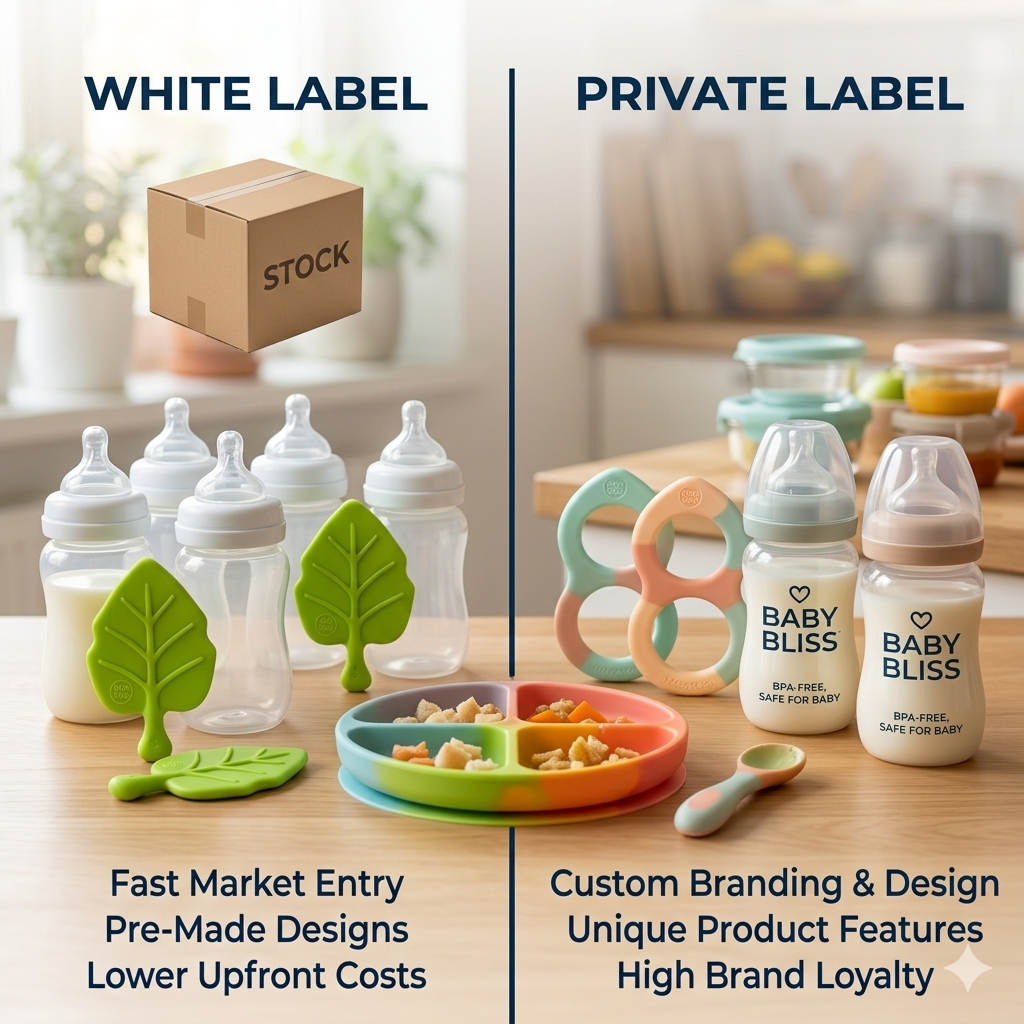
White label products are pre-manufactured, standardized items that multiple brands can sell under their own names. The product design, specifications, and features remain largely unchanged.
In this model:
- Minimal customization is available
- Faster time to market
- Lower development cost
- Limited differentiation
White labeling works well for brands that prioritize speed and simplicity.
What Are Private Label Baby Products?
Private label products are manufactured by a private label baby manufacturer but customized specifically for one brand. This may include:
- Unique product features
- Custom materials
- Packaging design
- Branding and labeling
- Size or flow variations (in feeding products)
Private label allows brands to create more differentiated and exclusive offerings compared to white label.
When Private Label Is the Better Choice
While white label works for quick launches, private label is often the smarter long-term strategy for serious baby brands.
1. Branding & Differentiation Needs
The baby market is highly competitive. To stand out, brands need more than just a logo on a standard product.
Private label enables:
- Unique packaging design
- Age-specific feeding variations
- Custom color schemes
- Improved ergonomics
- Feature enhancements (anti-colic vents, silicone upgrades, etc.)
This is especially important for feeding bottles, pacifiers, and other products where parents prioritize innovation and safety.
If your goal is building a recognizable brand identity, working with a private label baby products manufacturer offers significantly more flexibility than white label.
2. Product Innovation & Customization
Through custom baby products, brands can develop:
- Different nipple flow rates
- Specialized anti-colic systems
- Premium silicone variants
- Eco-friendly packaging
This level of personalization isn’t typically available with white label options.
Brands aiming for premium positioning or niche targeting often choose private label or OEM baby products (Original Equipment Manufacturer) for greater product control.
Cost, MOQ & Lead Time Comparison
One of the biggest considerations in the private label vs white label baby products debate is cost and logistics.
White Label
- Lower minimum order quantities (MOQs)
- Faster production timelines
- Lower upfront development cost
- Limited tooling charges
Best suited for:
- Startups testing a concept
- Small batch sellers
- Marketplace-focused brands
Private Label
- Slightly higher MOQs
- Longer development time
- Possible tooling or customization cost
- Higher perceived product value
Best suited for:
- Growing brands
- Retail-focused companies
- Export businesses
- Brands building long-term equity
While private label may require more initial investment, it often results in better margins due to stronger differentiation.
Regulatory Responsibilities: Compliance & Safety Considerations
The baby industry is strictly regulated due to safety concerns. Whether you choose white label or private label, compliance is non-negotiable.
Key Safety Considerations
- BPA-free material certification
- Food-grade material testing
- ISO manufacturing standards
- Migration and durability testing
- Regional regulatory approvals (FDA, CE, etc.)
In white label models, manufacturers typically handle core compliance. However, brands are still responsible for proper labeling and regional approvals.
In private label and OEM baby products, regulatory documentation becomes more customized. Brands must ensure that product modifications continue to meet safety standards.
Working with a reliable private label baby manufacturer simplifies compliance management and reduces risk of product recalls.
Quality Control & Brand Trust
Quality consistency becomes even more critical as brands scale.
White label products may be produced in bulk for multiple brands, which can sometimes limit customization in quality specifications.
Private label manufacturing offers better control over:
- Raw material sourcing
- Production testing
- Batch traceability
- Packaging inspection
For baby products, trust is everything. Parents prioritize safety over price, making consistent quality essential.
How Royal Baby Products Enables Flexible Private Label Solutions
One of the biggest challenges in baby product manufacturing is balancing quality, compliance, and affordability.
Royal Baby Products addresses this gap effectively.
Royal Baby specializes in flexible private label solutions designed to support both emerging and established baby brands.
What Royal Baby Offers
- Private label baby product manufacturing
- Custom baby products with tailored specifications
- OEM baby products for unique designs
- Certified safe materials
- Strong quality control processes
- Competitive pricing structures
Royal Baby focuses on solving the common manufacturing problem in the industry: inconsistent quality at unpredictable prices.
By optimizing production systems and maintaining strict quality checks, they deliver top-quality baby products at incredible prices — helping brands maintain healthy profit margins without compromising safety.
Their flexible approach allows brands to choose between standardized options and customized private label solutions, depending on growth strategy and market positioning.
Leave a Reply