
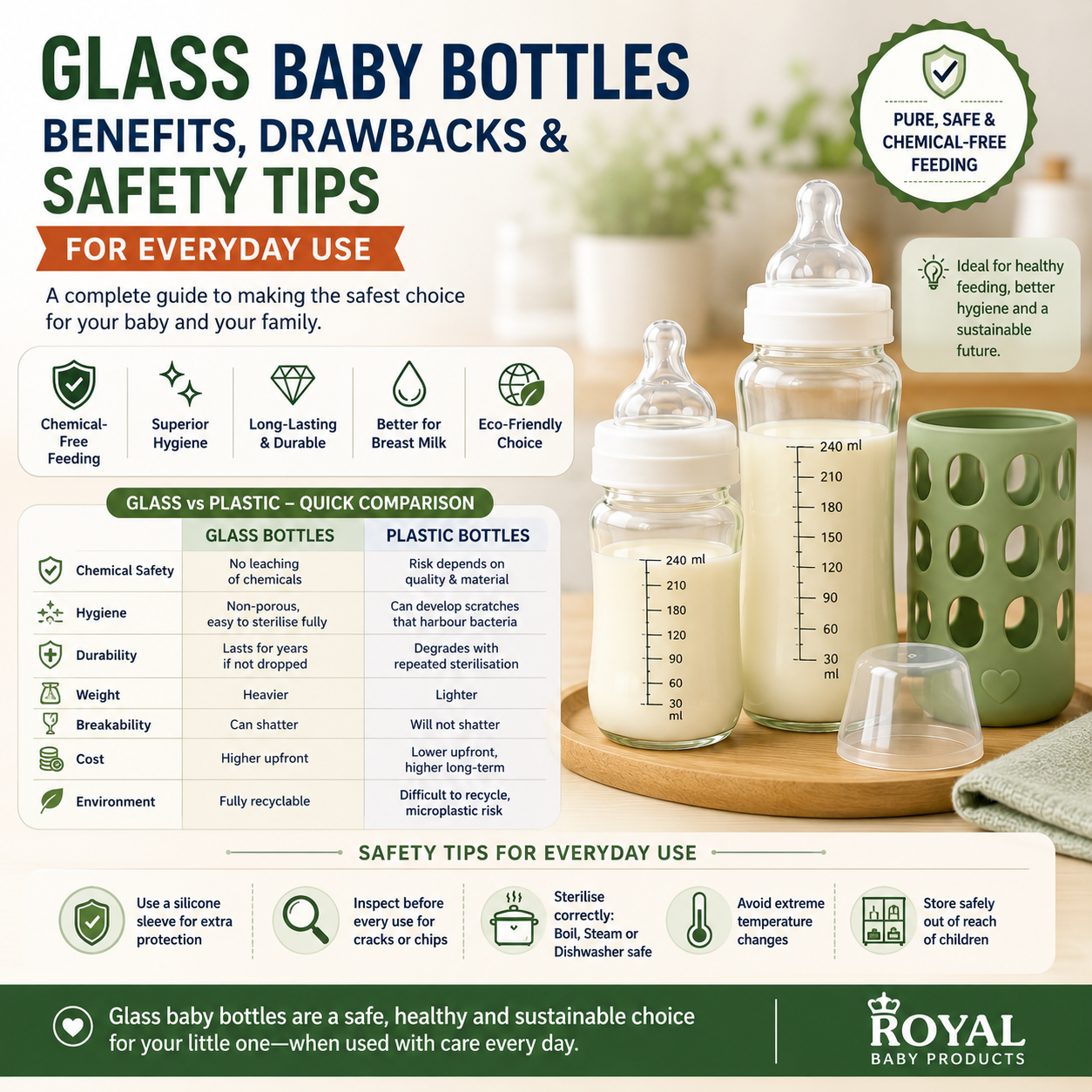
As parents become more conscious of the materials that come into contact with their babies, glass baby bottles have seen a significant resurgence in popularity. From South Africa to Southeast Asia and across the Middle East, more families are asking whether glass is a safer, healthier alternative to plastic.
The answer is not entirely straightforward. Glass baby bottles offer genuine advantages, but they also come with practical considerations that parents need to weigh carefully. This guide provides a complete, unbiased overview of glass baby bottles — what makes them beneficial, where they fall short, and how to use them safely every day.
What Are Glass Baby Bottles?
Glass baby bottles are feeding bottles made from borosilicate or soda-lime glass rather than plastic or silicone. They typically come with a silicone or latex nipple, a sealing ring, and a cap, just like their plastic counterparts.
Borosilicate glass is the preferred choice for baby bottles because it is:
- More resistant to thermal shock (safe for boiling and freezing)
- Less likely to leach chemicals into liquid
- Harder and more scratch-resistant than standard soda-lime glass
Benefits of Glass Baby Bottles
1. Chemical-free feeding
Unlike some plastics, glass is a completely inert material. It does not contain BPA, phthalates, PVC, or any other chemicals that may leach into breast milk or formula, particularly when heated. For parents in regions where regulatory oversight of plastic products is limited — such as parts of Southeast Asia and Africa — glass provides a guaranteed chemical-free option.
2. Superior hygiene and easier sterilisation
Glass is non-porous, meaning it does not develop microscopic scratches or grooves over time the way plastic does. These scratches in plastic bottles can harbour bacteria even after washing. Glass bottles can be sterilised using any method — boiling, steam, UV, or dishwasher — without degradation.
3. Long-lasting and cost-effective over time
A high-quality glass baby bottle can last for years if handled carefully. Unlike plastic bottles that need replacing every few months due to scratching, clouding, or material degradation, glass remains visually clear and structurally intact with proper care.
4. Better for breast milk storage
Research suggests that some of the beneficial components in breast milk, including white blood cells and certain antibodies, may adhere to plastic surfaces. Glass bottles minimise this adherence, ensuring your baby receives the full benefit of every feed.
5. Environmentally sustainable
Glass is fully recyclable and does not contribute to microplastic pollution. For environmentally conscious parents across markets such as South Africa, India, and the Middle East, glass bottles represent a more responsible long-term choice.
Drawbacks of Glass Baby Bottles
1. Weight
Glass bottles are significantly heavier than plastic, particularly when full. A standard 240ml glass bottle can weigh 200–300g when filled, which may be challenging for younger babies learning to hold their bottles or for parents managing multiple feeds throughout the day.
2. Breakability
Glass can shatter if dropped on hard surfaces, posing a safety risk. This is a genuine concern in everyday family environments, particularly on tile or stone floors common in homes across South Asia and the Middle East. Using silicone sleeves around glass bottles significantly reduces this risk.
3. Higher upfront cost
Glass baby bottles are generally more expensive to purchase than equivalent plastic bottles. However, their longer lifespan often offsets this over time.
4. Temperature sensitivity for hands
Glass conducts heat more readily than plastic. A bottle of warm milk can feel very hot to hold, which requires care during preparation. Always test the temperature before handing to your baby.
Glass vs Plastic Baby Bottles — Quick Comparison
Chemical safety: Glass — no leaching of chemicals | Plastic — risk depends on quality and material grade
Hygiene: Glass — non-porous, easy to sterilise fully | Plastic — can develop scratches that harbour bacteria
Durability: Glass — lasts years if not dropped | Plastic — degrades with repeated sterilisation
Weight: Glass — heavier | Plastic — lighter
Breakability: Glass — can shatter | Plastic — will not shatter
Cost: Glass — higher upfront | Plastic — lower upfront, higher long-term replacement
Environment: Glass — fully recyclable | Plastic — difficult to recycle, microplastic risk
Safety Tips for Using Glass Baby Bottles Every Day
Use a silicone sleeve
A silicone sleeve fits around the outside of the bottle and acts as a shock absorber if dropped. It also makes the bottle easier to grip for both parents and babies, and reduces heat transfer to the hands during warm feeds.
Inspect before every use
Before each feed, check the bottle for chips, cracks, or scratches. Even a hairline crack weakens the structural integrity and can cause the bottle to shatter unexpectedly. Discard any bottle that shows signs of damage.
Sterilise correctly
- Boil in water for 5 minutes — suitable for borosilicate glass
- Use a steam steriliser — most effective and time-efficient
- Place in a dishwasher on a standard cycle — safe for most glass bottles
- Allow to cool and air dry on a clean drying rack before use
Avoid extreme temperature changes
Although borosilicate glass handles thermal shock better than standard glass, sudden changes from very cold to very hot (or vice versa) should be avoided. Do not take a frozen bottle and place it directly into boiling water. Thaw frozen milk gradually.
Store safely
Store glass bottles on a flat, stable surface away from the edges of counters or shelves. In households with toddlers or older children, keep glass bottles out of reach to prevent accidental knocking.
Who Should Consider Glass Baby Bottles?
Glass baby bottles are an excellent choice for:
- Parents who prioritise chemical-free feeding and have concerns about plastic safety
- Babies with known sensitivities to taste or feeding difficulties
- Families looking for a sustainable, long-lasting feeding solution
- Parents who primarily feed at home where the risk of dropping is manageable
For parents who travel frequently or live in very hot climates — such as India, Thailand, and parts of the Middle East — a combination approach works well: glass bottles at home and high-quality BPA-free silicone or plastic bottles for on-the-go use.
Conclusion
Glass baby bottles offer a compelling set of advantages — from chemical-free feeding and superior hygiene to long-term durability and sustainability. The key is understanding their practical limitations and using them with appropriate safety measures in place.
Royal Baby Products supplies a range of glass-compatible feeding nipples and silicone accessories designed to complement glass bottle use. Our feeding nipples meet international safety standards and are trusted by distributors and parents across South Africa, Southeast Asia, India, and the Middle East.
Frequently Asked Questions
Q: Are glass baby bottles really safer than plastic?
A: In terms of chemical safety, yes. Glass is inert and will not leach chemicals into milk. High-quality BPA-free plastic is also safe, but glass offers more certainty regardless of heating conditions.
Q: Can glass baby bottles go in the dishwasher?
A: Yes, most borosilicate glass bottles are dishwasher-safe. Always place them on the top rack and check the manufacturer’s guidelines.
Q: At what age can babies hold glass bottles?
A: Most babies begin attempting to hold their bottles from around 6–8 months. Due to the weight of glass, many parents switch the nipple and cap to a plastic bottle for self-feeding stages.
Q: How do I know if my glass bottle is borosilicate or soda-lime?
A: Check the product label or manufacturer’s website. Borosilicate glass has a slight blue or green tint when viewed edge-on, while soda-lime glass appears more neutral.
Q: Where can I find glass baby bottles in South Africa and Southeast Asia?
A: Royal Baby Products distributes certified glass-compatible baby feeding accessories across South Africa, Thailand, Malaysia, India, and the Middle East. Visit our distributor page for regional contacts.

Leave a Reply